A smile is undoubtedly the best tool one has to represent oneself, but nature does not always provide perfect and regular teeth, despite the good care one tries to take of the mouth. In these cases, medicine resorts to solutions such as orthodontics, which is the branch of dentistry that deals with the diagnosis, prevention, and treatment of existing anomalies between the maxilla and mandible, and between the dental arches (misalignment of the teeth).
To formulate a correct diagnosis, some photos, radiological tests (Panoramic and Cephalometric X-rays), as well as impressions of the dental arches, also taken with an intraoral scanner, are necessary.
At Vdent, we have the intraoral scanner and Panoramic X-ray in order to preview the final result of the treatment.
The digital impression of the teeth is a very popular option for patients, because it will no longer be necessary to resort to powders or annoying impression pastes.
INVISALIGN
LINGUAL
TRADITIONAL
FIXED TRADITIONAL AESTHETICS
DIGITAL
PALATAL
MOBILE
The function of orthodontics is to intercept dentoskeletal anomalies and restore normal neuromuscular balance along with a harmonious smile relationship.
Interceptive Orthodontics

Very often during growth, due to bad habits or genetic characteristics, dentoskeletal relationships can be altered, presenting in different forms, such as a narrow palate with breathing difficulties, dental malpositions with crowding or diastemas, skeletal or functional alterations.
The orthodontist follows and monitors the patient throughout the growth period and, therefore, has different functions and characteristics depending on the period in which it is necessary to intervene.
When is it appropriate to make the first orthodontic visit?
Which malocclusions should be intercepted and treated as soon as possible?
These are the problems of palate contraction, especially if they are associated with an inversion of the bite of the posterior teeth, as they often affect the position and symmetrical development of the jaw.
Another orthodontic problem that requires timely intervention is the inversion of the anterior bite (class 3) in which the development of the mandible (chin) is exuberant compared to the upper jaw.
Is it necessary to treat patients with temporary teeth with orthopedic appliances?
Absolutely, yes, since we depend on temporary teeth to correct skeletal problems and alterations of the occlusion.
What can happen if they are not corrected?
Respiratory function and the correct posture of the tongue are often affected by an incorrectly developed upper arch. In addition, the jaw in developing conditions will be positioned asymmetrically or in an advanced position, also influencing the future development of the face. Therefore, it is necessary to correct the skeletal problem of the palate not only for structural or aesthetic reasons, but above all for functional reasons.
If the young patient has grown with a contracted palate or a pronounced jaw and has already changed his teeth, is it still possible to treat him effectively?
Many conditions can be resolved successfully even at a later stage, but the type of device used, the timing, and the patient’s response change. The gold standard for these problems is always early treatment in terms of cost/benefit ratio.
- You can consult for our Free Diagnosis in patients from 4-10 years old
Orthodontics with Conventional Brackets
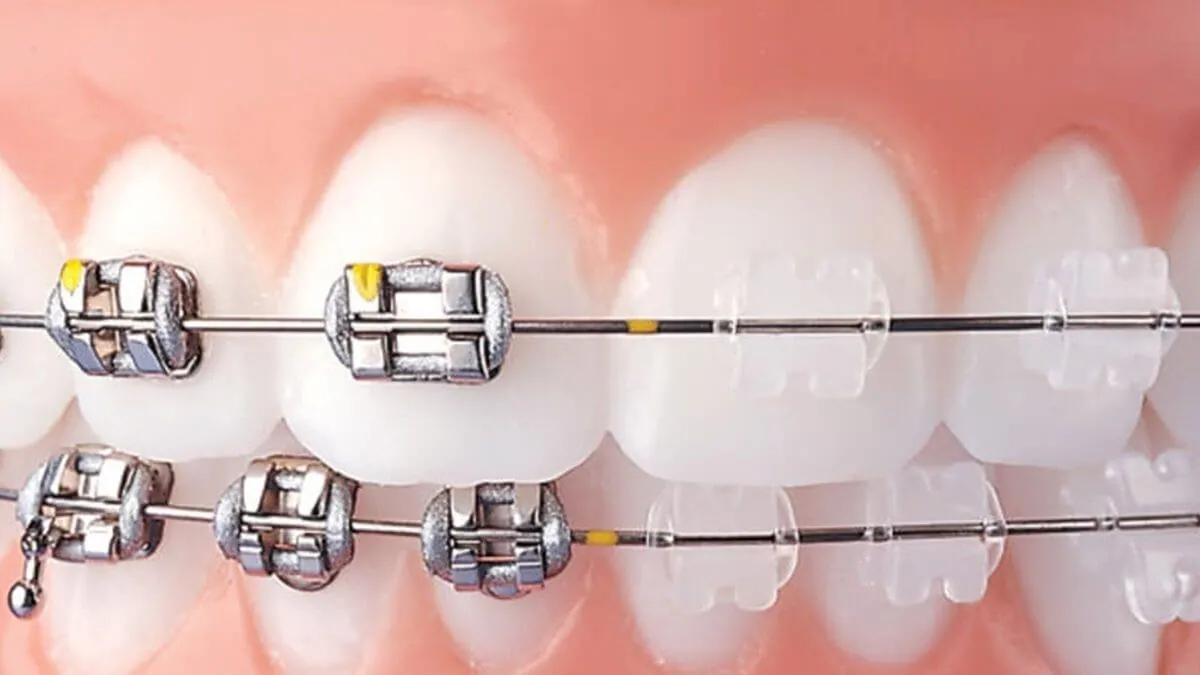
Placing metal, ceramic, or sapphire brackets on the tooth with metal arches of different thicknesses, which are changed during the treatment according to the patient’s needs.
Fixed orthodontics with Brackets is very effective, leaving the mouth perfectly aligned in a period of time of between 1 and 2 years depending on each case. Of course, its maintenance must be more strict as it is easier for food to get trapped between the arches and the brackets, so a specific, deeper, and periodic hygiene of the mouth is recommended.
Metal vs. Ceramic Brackets
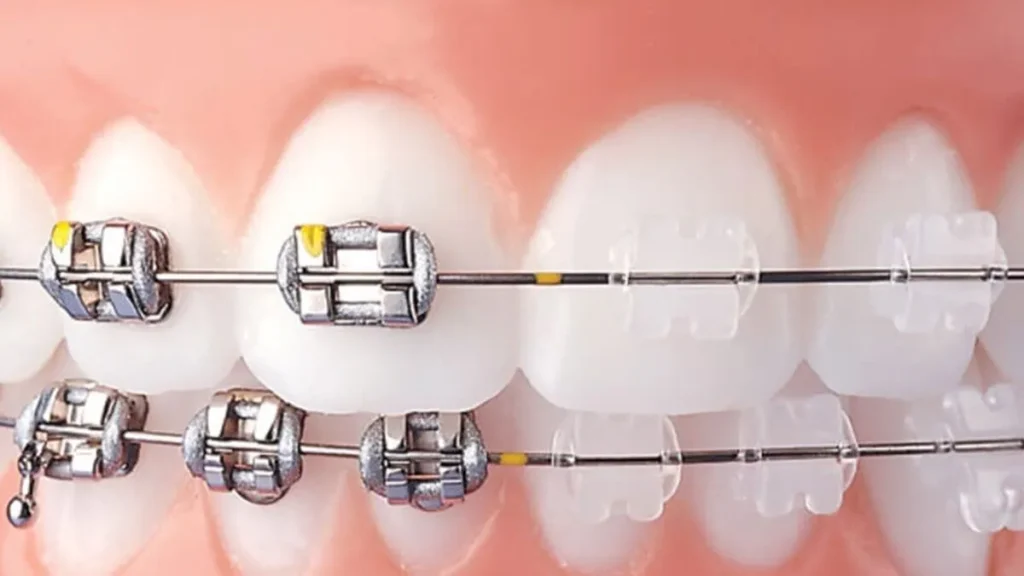
The difference between metal or aesthetic Brackets will be mainly visual. Ceramic Brackets go more unnoticed; for their part, metal Brackets offer greater resistance.
The question is to know which Brackets are better, metal or aesthetic.
Metal Brackets
Although aesthetically they may not seem the best, metal Brackets are the most effective, and that will shorten the time of your treatment. In addition, they are resistant and, if one of them comes off, its placement is simple. They are easy to clean, and of all the treatments it is the cheapest.
They are the most used over the last few years. They are usually made of high quality stainless steel.
Ceramic Brackets
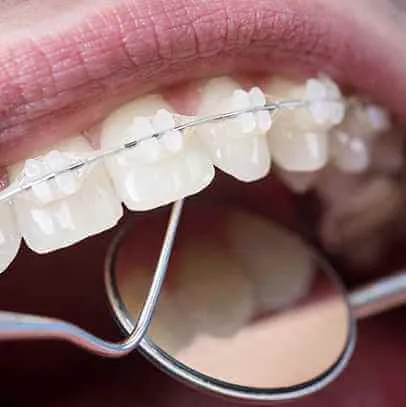
Ceramic Brackets have been manufactured with materials that simulate the tone of the teeth and are therefore less visible than metal ones.
They disguise a little more and can become imperceptible to the eye.
The Brackets are made of materials similar to porcelain, so their color adapts to that of your teeth. The only disadvantage is their care: you should avoid foods that can discolor the ceramic, such as cola drinks, coffee, or mate. Although it is the most aesthetic option, the treatment is somewhat longer than with metal ‘brackets’ and its price is higher, due to the material with which they are made.
An interesting question when choosing the type of Brackets is to evaluate the replacement value of the same in the event that one of them comes off over time.
After Orthodontic Treatment, what's next?
RETAINERS:
Once the orthodontic treatment is finished, your teeth must be stabilized in the new position acquired.
For this, our orthodontist will place a fixed retention (thin wire) that will be glued behind the teeth, and a system of removable retention (can be removed and put on).
So that the teeth do not move, THE RIGOROUS USE OF RETENTION will be essential, as indicated below:
- Fixed retentions are for life.
Once the brackets are removed, the removable retention device should be used ALL DAY FOR AT LEAST ONE MONTH. - The longer it is used, the greater the stability of the treatment results.
- After the first month, the removable device will become NIGHTTIME USE FOR LIFE.
RETENTION CONTROLS are carried out: at one month, at 3 months, and at 6 months. From that moment on, annual retention controls must be carried out.
If at any time the fixed retainer comes off (completely or on any tooth), the patient should use the removable devices for 24 hours until the fixed retention is replaced.
- CARE OF THE APPLIANCES:
The appliances should be cleaned daily with soap and water or with specific tablets, and always stored in the box to prevent them from breaking. - WARRANTY:
The retention devices have a warranty of TWO MONTHS for wear or breakage.
This warranty does not cover the loss of appliances or fixed retention.
After this time, the realization of new devices will entail a cost.
ANY DENTAL TREATMENT PERFORMED AFTER THE PLACEMENT OF THE RETENTION may imply the need to make new appliances due to lack of adjustments.
We recommend going with the retainers to check that, after a dental treatment, the retainer fits perfectly.
THE FINAL STABILITY OF THE TREATMENT IS THE EXCLUSIVE RESPONSIBILITY OF THE PATIENT.
IF THE RETENTION DEVICES ARE NOT USED, THE TEETH WILL MOVE.