A. CARIOLOGY:
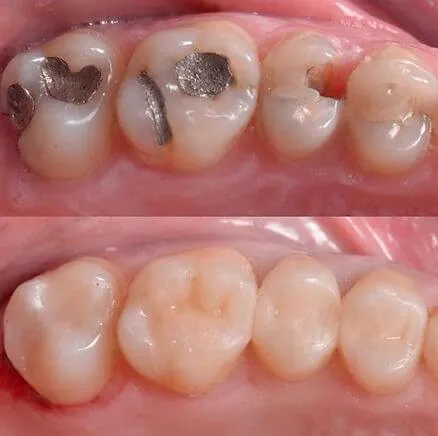
It is a branch of dentistry that deals with the treatment of teeth affected by carious lesions. In fact, tooth decay causes the destruction of the hard tissues of the tooth, enamel, and dentin, and is a process that, if not stopped in time, can lead to infection of the dental pulp and necrosis of the tooth itself, requiring ENDODONTICS to be performed.
One of the most important reasons to visit the dentist every 6 months is to check for new carious lesions or to make changes to old restorations (Amalgams, Resins), since these fillings, if not changed in time, cause cavities to form under the restoration, causing inflammation of the nerve and requiring possible ENDODONTICS.
B. ENDODONTICS:
The term Endodontics means “inside the tooth.”
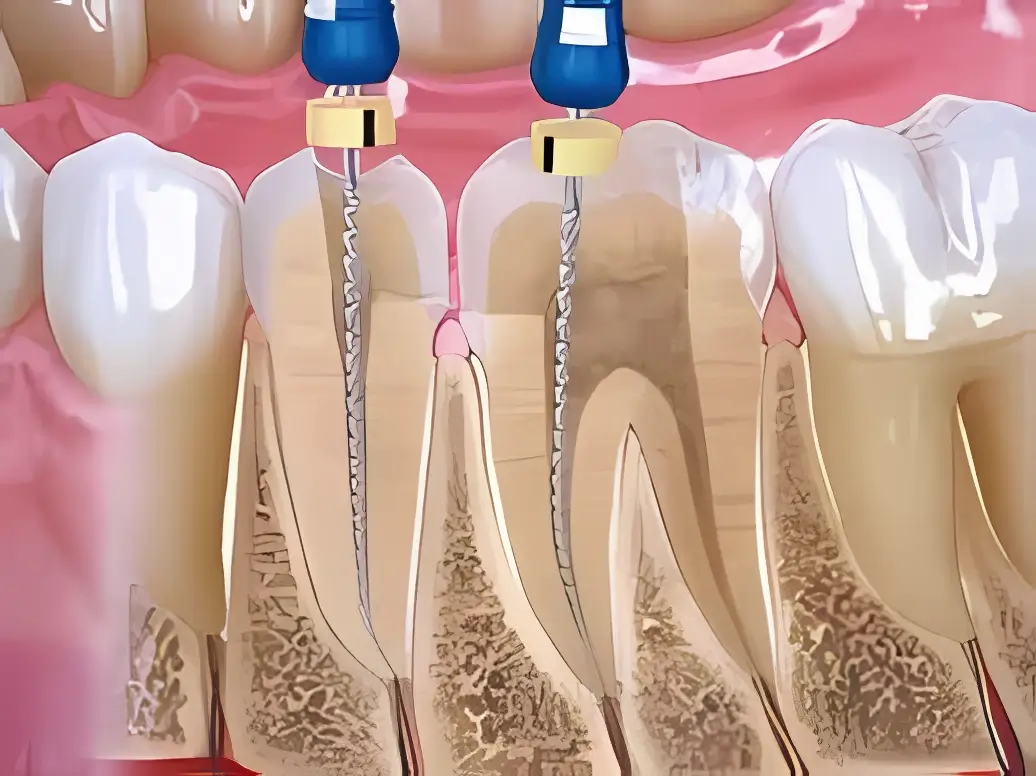
It is also defined as “root canal treatment” since it allows the operator to access the root canals of the tooth and proceed with a careful filling of the pulp (inflamed or infected) with resinous materials. This is the “devitalization” of the tooth seriously compromised by a caries process that has reached the pulp (the nerve) or after trauma that has caused necrosis (death) of the pulp itself.
Root canal treatment is now absolutely painless thanks to the use of modern local anesthetics, and may require 1 or 2 sessions for anatomically more complex teeth or particular pathological situations.
Subsequently, the conservative-prosthetic reconstruction of the crown will be carried out with a Fiber Post or Pin and a special resinous material to restore the hardness of the tooth.

ENDODONTIC RETREATMENT:
Non-surgical endodontic retreatment is a treatment option to resolve pathologies associated with endodontic failures, and in some cases are indicated for restorative purposes. The treatment consists of accessing the pulp chamber, removing the contents present in the root canals and reshaping the canals, to achieve adequate cleaning and obturation, in order to maintain the health of the periradicular tissues or promote their healing. Endodontic retreatment fundamentally treats cases of post-treatment disease due to endodontic failure.
The most common reason for endodontic failure is microbial infection. A tooth with a deficient root canal treatment, where the canal space does NOT contain sufficient filling material in the apical third, an incorrect chamber opening, untreated canals, canals that are cleaned and obturated incorrectly, errors during instrumentation (steps, perforations or instrument fracture), overextension of filling materials, coronal filtration and radicular cysts. It is not the complication itself that gives a persistent infection; on the contrary, it is the impossibility of eliminating the microorganisms present that causes the infection.
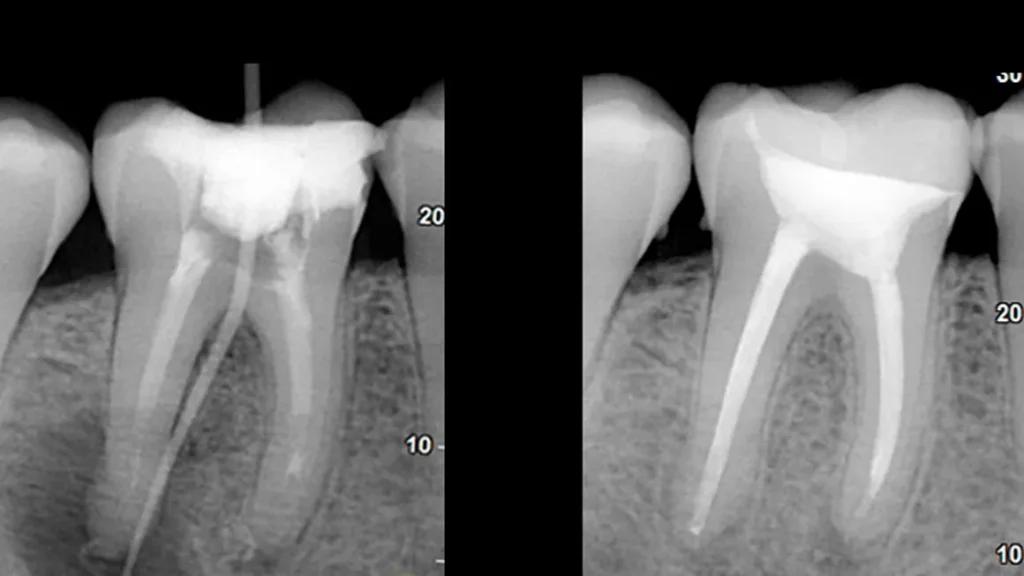
Before
After